
Sustainable Packaging Solutions for Takeaway Curry
Curry is one of the hardest foods in the world to package. It is hot, wet, oily, often deeply coloured and it has to survive a cyclist's pannier or a car boot and still arrive intact twenty minutes later. Any conversation about sustainable takeaway packaging has to start there, because a compostable box that leaks vindaloo through a customer's front door is not a green solution, it is a lost customer and a refunded order. Getting this right means balancing genuine environmental improvement against the unforgiving reality of the food.
Why curry breaks ordinary packaging
The traditional workhorse of the curry takeaway is the plastic container, usually polypropylene, which is cheap, leakproof, microwavable and stackable. Its weakness is end of life: much of it is not effectively recycled and it persists in the environment. The older foil containers with cardboard lids are widely recyclable in theory but leak and cannot be microwaved. The challenge for any greener alternative is to match the strengths, heat and oil resistance and a genuine seal, while improving on the disposal problem. Sauce is the acid test. A material that holds a dry biryani may weep oil from a rogan josh within minutes.
The material options actually worth considering
The market has matured well beyond flimsy first-generation compostables, and several materials now stand up to curry.
- Bagasse, moulded from sugarcane fibre left over from sugar processing, is sturdy, handles heat well, tolerates oil reasonably and is both compostable and made from a by-product. It has become a leading choice for curry bowls and platters.
- Board containers with a water-based or bio-based lining resist grease and can be recyclable or compostable depending on the coating; the coating is the detail that decides which.
- Recycled plastic, particularly rCPET, keeps the leakproof performance operators trust while using post-consumer material and remaining recyclable, a pragmatic middle path rather than a compostable leap.
- PLA, a plant-based bioplastic, looks like clear plastic but is only industrially compostable and cannot go in home compost or standard recycling, which limits its real-world benefit.
No single material wins outright. Many curry takeaways end up with a small range: rigid bagasse or lined-board bowls for the wet curries and rice, paper bags and board carriers for delivery, and recyclable or recycled options for cold and dry items.
Compostable is not the same as recyclable
The most common and costly confusion in this area is treating compostable and recyclable as interchangeable. They are not, and the distinction has real consequences. Compostable packaging generally needs an industrial composting facility to break down, and if the customer has no food-waste collection that accepts it, or throws it in with recycling, it can contaminate the recycling stream and end up in landfill anyway. Home-compostable and industrially-compostable are different standards again. A genuinely sustainable choice depends not only on the box but on where it can actually be disposed of in your area, which is why clear labelling telling the customer what to do with each item is as important as the material itself.
The UK rules pushing the change
This is not purely a matter of conscience; regulation is closing off the worst options and adding cost to others. Several strands matter for a curry takeaway:
- The Plastic Packaging Tax applies to plastic packaging that does not contain at least a set proportion of recycled content, which nudges operators and manufacturers towards recycled material.
- Bans on certain single-use plastic items, including some plastic cutlery, plates and expanded polystyrene food and drink containers, have come into force in England, with parallel measures across the other UK nations.
- Extended Producer Responsibility is shifting the cost of dealing with packaging waste onto the businesses that put it on the market, reported through a set of obligations that larger operators in particular must track.
The direction of travel is clear and one-way. An operator choosing packaging today is wise to assume the rules will tighten further, and to move ahead of them rather than scramble to catch up.
Cost, and how to manage it honestly
There is no pretending greener packaging is always cheaper; bagasse and lined-board options usually cost more per unit than basic plastic. But the gap has narrowed as volumes have grown, and the true cost picture is wider than the unit price. Set against it are the plastic tax on non-recycled material, the marketing value many customers now place on responsible packaging, and the growing number of delivery platforms and local authorities encouraging or requiring greener choices. Practical ways to control the cost include:
- Right-sizing containers so you are not paying for and shipping air, and matching container size to portion so sauce does not slosh in a half-empty box.
- Buying the core lines in bulk once you have settled on them, while trialling new items in small quantities first.
- Charging a modest, clearly explained packaging contribution on delivery orders, which many customers accept when they understand it funds better materials.
- Cutting needless extras, the double-bagging, the unrequested cutlery, the oversized carrier, which saves both money and waste at once.
Switching without a disaster
The sensible way to change packaging is to test before you commit. Order samples and run your own worst-case trials: fill a container with your oiliest curry, seal it, put it in a bag, leave it twenty minutes, carry it around and then open it. Check for leaks, for the lid warping, for the base going soggy, for heat transfer that burns a delivery rider's hands. Get feedback from drivers and customers before you buy a pallet. A staged switch, starting with the dishes and formats that travel best, lets a kitchen build confidence and iron out problems without gambling the whole operation on an untested box. Done patiently, a curry takeaway can move to markedly greener packaging with no more leaks than before, and often fewer, because the exercise forces a proper look at how the food is packed in the first place.
Related Articles
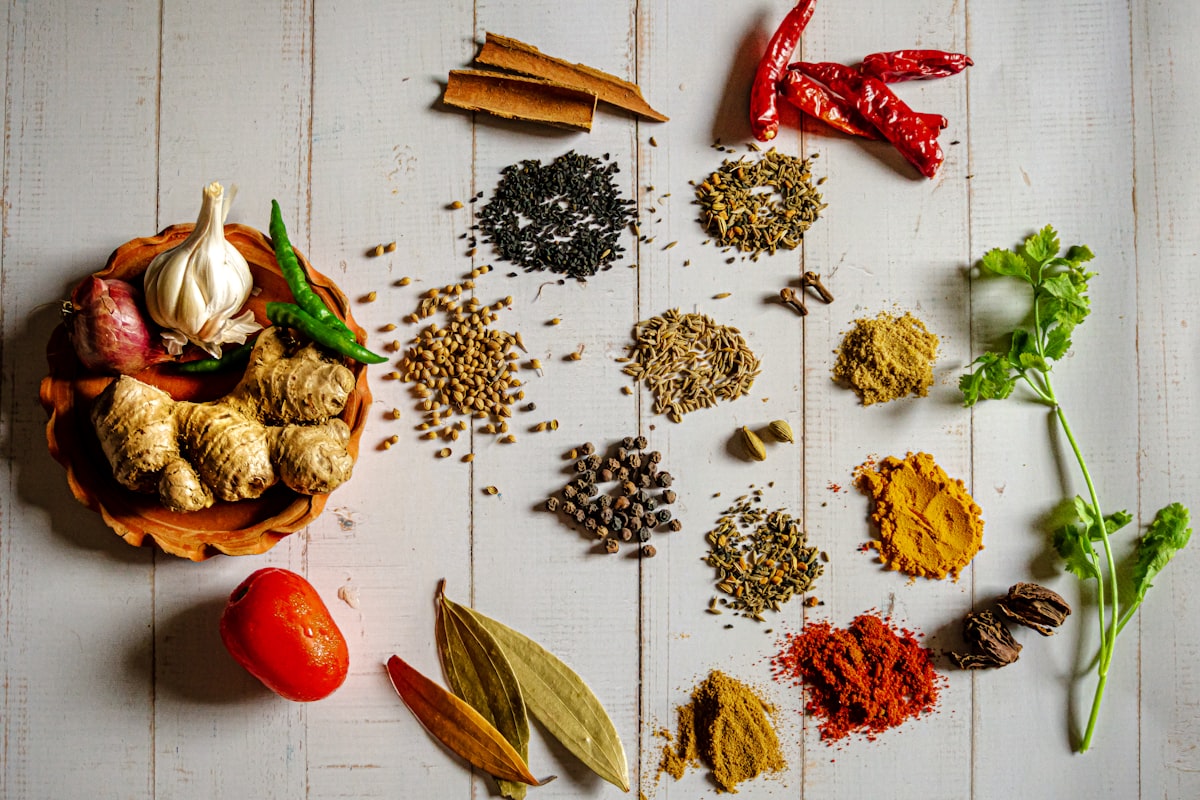
Panch Phoron: Mastering Bengal's Five-Spice Tempering
Panch phoron is the Bengali five-spice blend used whole, never ground, and crackled in hot oil to transform dals and vegetables. Here are the five seeds, the reason they stay intact, and how to nail the tempering every time.
Asafoetida (Hing): The Fermented Resin That Powers Jain Kitchens
Asafoetida, or hing, is a pungent resin that transforms in hot oil into a savoury, almost oniony depth, which is why it sits at the heart of Jain and onion-free cooking. Here is how to bloom it correctly, why it soothes dals, and how to choose pure over compounded hing.

Mustard Oil: The Pungent Soul of Bengali and Bihari Cooking
Mustard oil gives Bengali and Bihari food its unmistakable sharp, nose-tingling kick, but it needs to be heated to smoking point before use to mellow that raw bite. Here is why you smoke it, how it powers fish and pickles, and the curious 'external use only' label found on UK bottles.