
Restaurant Photography Tips for Social Media
Why curry is genuinely hard to photograph, and how to win anyway
Curry is one of the most difficult foods to shoot well, and it helps to admit that up front. Rich sauces are often brown or deep red, they sit flat in the bowl, and they can look muddy and greasy under the wrong light. But the same qualities that make curry hard, its glossy sauces, vivid garnishes and dramatic tandoori char, become huge advantages once you know how to handle them. You do not need a professional camera; a modern smartphone shoots more than well enough for social media. What you need is good light, a bit of styling and a repeatable routine, and those are all within reach of any restaurant owner.
Light is everything, and daylight is free
The single biggest factor in a good food photo is light, and the best light costs nothing. Soft, indirect daylight from a window flatters food better than any restaurant fitting. Set up a small shooting spot near a window, ideally with the light coming from the side or slightly behind the dish rather than straight on, which gives sauces depth and makes garnishes cast gentle shadows. Avoid your overhead restaurant lights and, above all, avoid the on-phone flash, which flattens the food and turns curry into a shiny orange puddle.
- Shoot in daylight where possible, moving a dish to the window rather than photographing it on a dim table.
- Diffuse harsh midday sun through a thin white curtain or a sheet of tracing paper.
- Use a simple white card opposite the window to bounce light back and lift the shadows.
If you must shoot in the evening, a single soft, warm-white LED panel positioned to the side beats any amount of coloured ambient lighting.
Styling the plate so the sauce comes alive
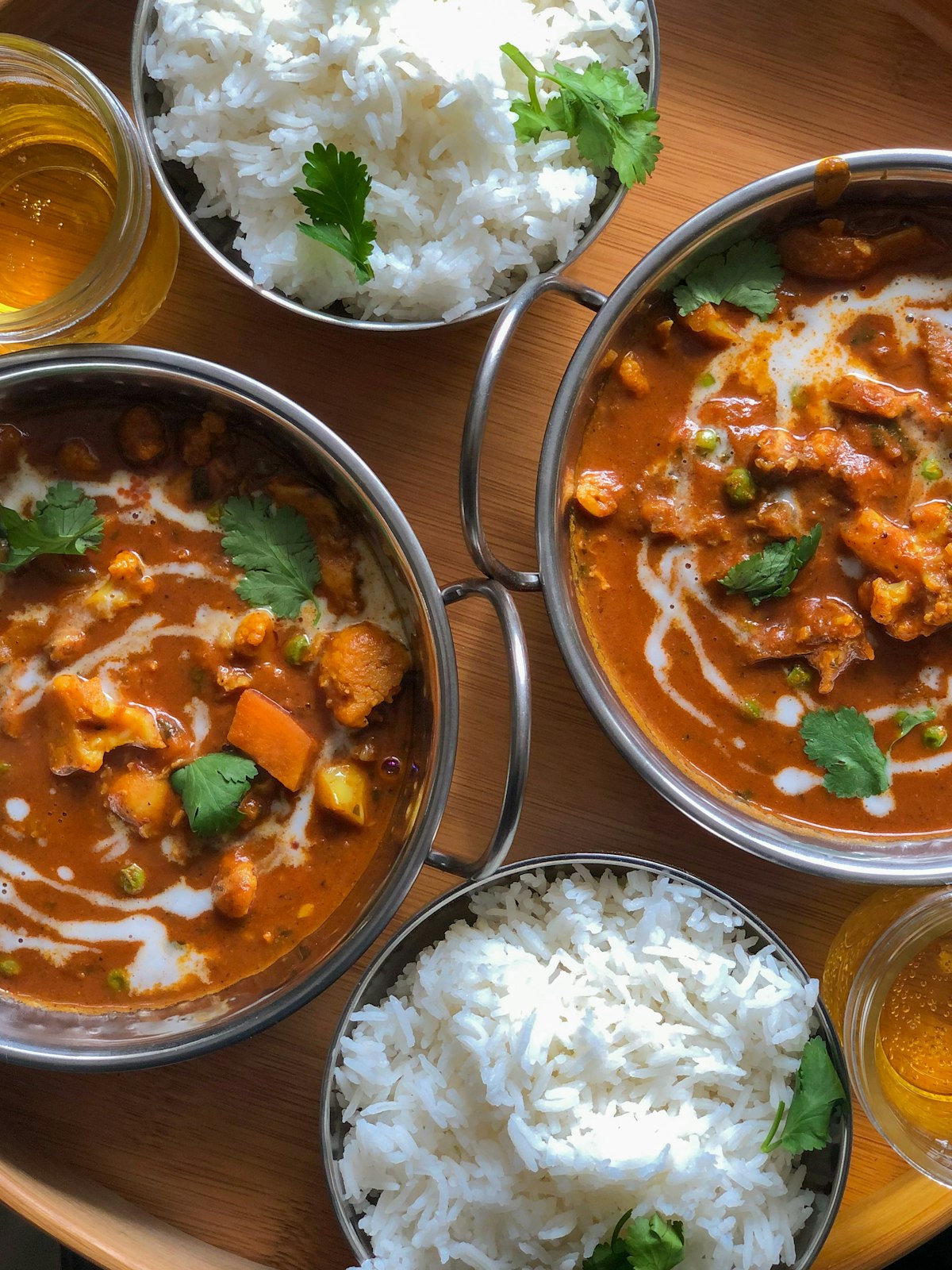
A little styling transforms a brown curry. The goal is contrast, freshness and texture. A swirl of cream on a rich makhani, a scatter of fresh coriander, a few slivers of red chilli or ginger, a wedge of lime, or the deep char marks on tandoori meat all give the eye something bright to land on. Serve dishes in vessels that flatter the food, such as dark bowls or copper karahis that make golden and red sauces pop, and wipe the rim clean before you shoot. Photograph food at its absolute peak, straight from the pass while the sauce is glossy and the naan is puffed, because curry dulls and forms a skin within minutes. A steaming, freshly finished dish always beats one that has been styled for twenty minutes and gone cold.
Composition and angle
The angle you choose should suit the dish. A flat-lay from directly overhead works beautifully for a spread, a thali, or a table laid with several dishes and breads, showing the whole feast at once. A lower, roughly 45-degree angle suits a single hero dish, a stack of naan or a sizzling platter because it shows height and the glossy surface catching the light. Fill the frame and get close, since curry rewards detail, but leave a little breathing space so the image does not feel cramped. Odd numbers and a touch of asymmetry, a bowl off-centre with a folded napkin and a scattering of spices, feel more natural than a rigidly centred plate. Keep backgrounds simple; a plain wooden board, a dark slate or a linen cloth stops the eye wandering.
Editing without overcooking it
Editing should enhance what is there, not invent a dish that will disappoint in real life. A few small adjustments make a big difference: a modest lift in brightness and contrast, a gentle boost to warmth so the sauces glow, and a careful nudge of saturation to bring out the garnishes without turning everything radioactive. Straighten and crop for a clean composition. Free phone apps handle all of this easily. The test is honesty: the customer should recognise the plate that arrives as the one they saw online, so resist filters that push the colours somewhere the kitchen cannot deliver.
Turning photos into content that fills tables
Good photos only earn their keep when they are put to work. Build a small library by shooting a batch of dishes in one well-lit session rather than grabbing rushed pictures during service. Post consistently and pair strong images with useful captions, the name of the dish, its heat level, whether it is a special, and a clear prompt to book or order. Video is increasingly powerful, and short clips of a naan coming out of the tandoor, cheese pulling from a garlic naan, or a sizzling platter arriving at the table stop people scrolling far more effectively than a still. Encourage happy customers to tag you, and repost their pictures with permission, since genuine guest photos build trust in a way polished shots cannot.
Keep it consistent and on-brand
Over time, consistency is what builds a recognisable feed. Try to keep a broadly similar look across your posts, a consistent style of lighting, backgrounds and editing, so your restaurant's page feels like a coherent whole rather than a jumble. That visual identity, applied across your social media, website and delivery app listings, quietly reinforces your brand every time someone sees a dish. You do not need to be a professional photographer to achieve it. A window, a clean bowl, a fresh garnish, a steady phone and a little discipline will produce images that genuinely bring people through the door.
Related Articles

Organising a Charity Curry Night for Your Community
A charity curry night builds community goodwill and puts your restaurant in the spotlight. Here's how to organise a great one.

How to Enter and Win a Curry Award
Winning a curry award can transform your business. Here's how to enter, what judges look for, and how to maximise the PR.

Gen Z Dining Habits and What They Mean for Curry
Gen Z eats differently, orders differently, and discovers restaurants differently. Your curry house needs to adapt or miss out.