
Regional Curry Styles Across the Indian Subcontinent
Why one word cannot hold a subcontinent
The single English word "curry" conceals a culinary landscape as varied as the whole of Europe. A fiery Chettinad chicken from the deep south, a fragrant Kashmiri rogan josh from the mountainous north, a mustard-oil fish curry from Bengal and a coconut-laced Sri Lankan dish share almost nothing beyond the presence of spice. Geography, climate, religion and centuries of trade have produced dozens of distinct regional styles, each with its own defining fat, spice palette, staple grain and cooking technique. Travelling the subcontinent region by region is the only honest way to understand what curry really is.
The north: dairy, dried fruit and the tandoor
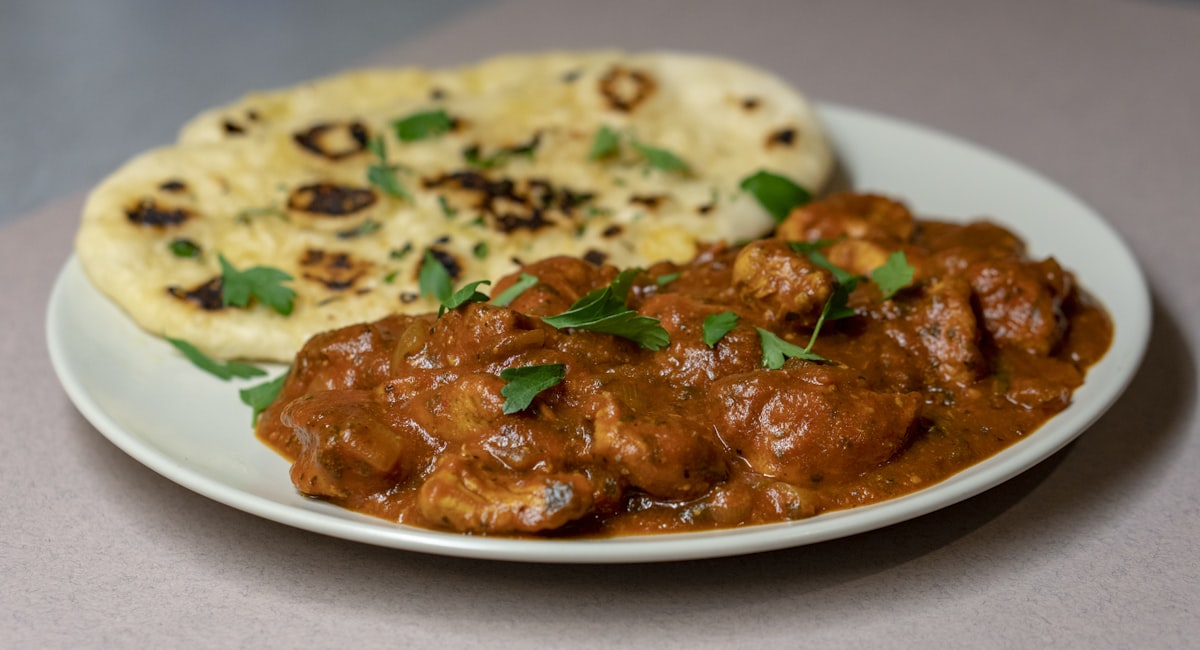
Northern Indian and Pakistani cooking, the tradition that gave Britain its tandoori chicken and much of its restaurant repertoire, is defined by richness. This is wheat country, so breads such as naan, roti and paratha take the place of rice as the everyday staple. The cooking leans heavily on dairy: ghee, cream, yoghurt and paneer give dishes a luxurious body.
- Punjabi cuisine offers robust, buttery dishes such as butter chicken and dal makhani, and the clay tandoor oven that chars breads and marinated meats.
- Kashmiri cooking is subtler and aromatic, using fennel, dried ginger and Kashmiri chilli for deep colour without ferocious heat, as in the classic rogan josh.
- Mughlai cuisine, the courtly legacy of the Mughal empire, brings biryanis, kormas and dishes enriched with nuts, saffron and cream.
The northern style is what most Britons first encountered, which is why cream and almonds loom so large in the popular idea of curry.
The south: coconut, curry leaves and tamarind
Travel south and the cooking transforms completely. Rice replaces wheat as the foundation of every meal, and the fat of choice is coconut oil rather than ghee. Coconut in every form, milk, cream, grated flesh, appears constantly, balanced by the sourness of tamarind and the citrus fragrance of fresh curry leaves and mustard seeds crackled in hot oil.
- Kerala produces gentle, coconut-milk seafood curries alongside fierier meat dishes, reflecting its long spice-trading history.
- Tamil Nadu, and especially the Chettinad tradition, is renowned for some of the boldest, most peppery cooking on the subcontinent, built on freshly roasted and ground spice blends.
- Goa, shaped by Portuguese rule, gave the world the genuine vindaloo, a pork dish preserved with vinegar and garlic that bears little resemblance to its British namesake.
Southern food is also predominantly vegetarian in much of the region, giving rise to lentil-based sambar, tangy rasam and an endless variety of vegetable preparations.
The east: mustard, fish and a lighter hand
Bengal and the eastern regions, spanning West Bengal and Bangladesh, form a river delta where freshwater fish is king and the defining flavour is the sharp pungency of mustard. Cooking here uses mustard oil as its base and a distinctive five-spice blend called panch phoron, a mix of whole fenugreek, nigella, cumin, mustard and fennel seeds tempered in hot oil.
Bengali dishes tend to be lighter and more delicately spiced than their northern cousins, prizing the freshness of the fish and vegetables over heavy sauces. Signature preparations include fish cooked in a mustard paste, prawns in coconut, and an array of vegetable dishes. This is the home cuisine of the Sylheti families who built Britain's curry industry, though the food they served customers was heavily adapted and looked little like what they cooked at home.
The west: from vegetarian thalis to fiery coastal heat
Western India spans a striking range. Gujarat is famous for its largely vegetarian cooking and a characteristic sweet-savoury-sour balance, served as the compartmentalised thali. Maharashtra runs from the mild to the incendiary, with the searing red Kolhapuri style at one extreme. Down the coast, the food grows hotter and more coconut-driven, sharing much with the south.
Sri Lanka: an island apart
Across the water, Sri Lanka has its own emphatic identity. Its cooks roast spices dark before grinding them, producing so-called black curries of remarkable depth, and they make liberal use of coconut, pandan leaf, curry leaf and the fierce local chillies. Coconut sambols, hoppers and rice-and-curry spreads make the island's food instantly distinct from anything on the mainland.
What the regions share, and what they don't
Pulling these threads together reveals a few honest generalisations. The dividing lines run along a handful of practical axes:
- Staple grain: wheat breads dominate the north, rice the south and east.
- Cooking fat: ghee in the north, coconut oil in the south, mustard oil in the east.
- Souring agent: yoghurt and cream in the north, tamarind and kokum in the south, mustard in the east.
- Spice technique: slow-simmered rich gravies in the north, freshly roasted and ground masalas in the south, tempered whole spices in the east.
These distinctions are shaped by climate, what grows locally, what religion permits and what history introduced. For the British diner used to a menu organised by heat alone, exploring the subcontinent's true regional styles is a revelation: it replaces a single flattened idea of curry with a map of dozens of proud, particular and utterly different cuisines, each worth seeking out on its own terms.
Related Articles
Shorshe Ilish: The Bengali Art of Hilsa in Mustard Gravy
Shorshe ilish marries the oily, intensely flavoured hilsa fish with a sharp mustard gravy in a dish that sits at the very heart of Bengali identity. Here is how it is built, why the bones matter, and how to tame the bitterness of the mustard.

Shutki: Inside Bangladesh's Pungent World of Dried Fish
Shutki, Bangladesh's sun-dried fish, is one of the country's most polarising and beloved ingredients. This is the story of its coastal craft, its fiery bhortas and curries, and the deep regional pride it carries.

Mezban: The Communal Beef Feast of Chittagong
Mezban is Chittagong's grand tradition of feeding the community, centred on a fiery, ghee-rich beef curry served to thousands. Explore its history, its distinctive mezbani gosht, and how the custom travels to British gatherings.