
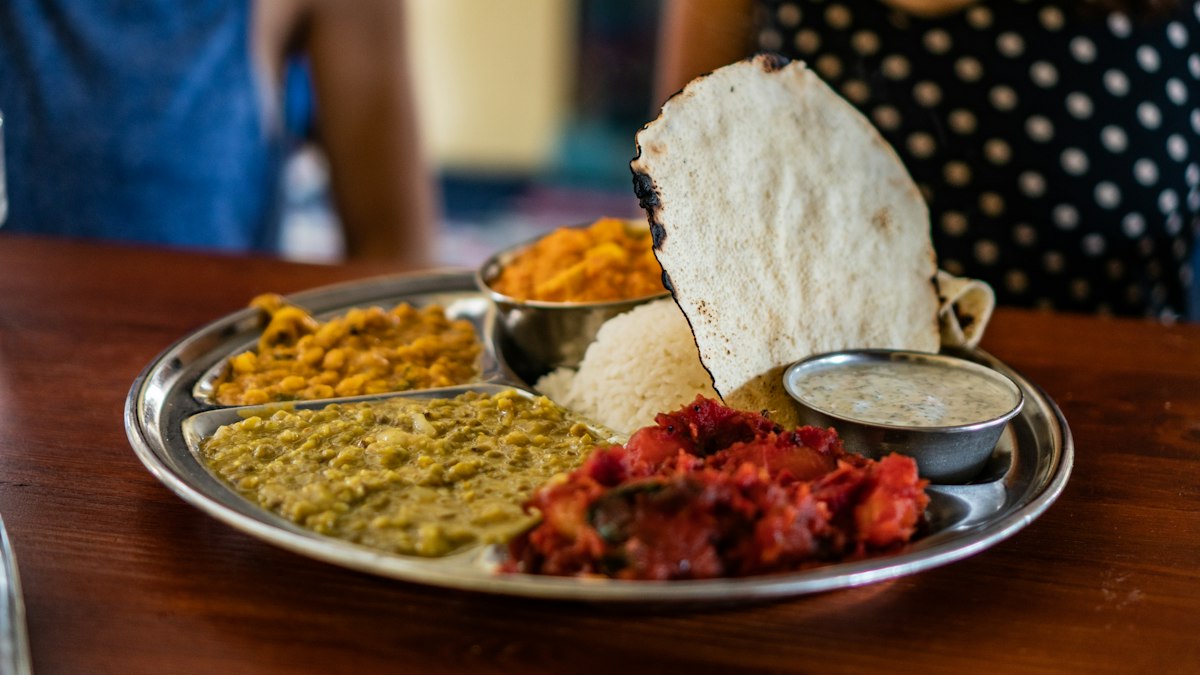
Curry and British Pop Culture: A Love Story
When a takeaway became a national ritual
Few foods have crossed so completely from the margins to the mainstream of British life as curry. The Friday-night takeaway, the post-pub balti, the office lunch debate over who orders the phaal are cultural rituals as recognisable as the Sunday roast. What makes curry unusual is not just that Britons eat it, but that they talk about it, sing about it, joke about it and argue over it. That constant chatter is the real love story: curry is one of the few things the country has adopted so wholeheartedly that it turns up in pop songs, prime-time comedy and everyday slang without anyone finding it remarkable.
The soundtrack of the curry house
Music has done as much as anything to lodge curry in the popular imagination. Britain has a long tradition of affectionate, faintly ridiculous songs about the subject, the most famous being the parody track that reworked a well-known ballad into a lament about a vindaloo-fuelled evening. During major football tournaments, terrace chants borrowing the word "vindaloo" turned a menu item into a rallying cry, sung by thousands who could not tell a rogan josh from a dhansak. The point was never culinary accuracy; it was that the word itself had become shorthand for a very British kind of boisterous, self-mocking pleasure.
Bhangra and British-Asian fusion artists took the relationship somewhere more serious in the 1990s and 2000s, blending Punjabi rhythms with garage and hip-hop and, in the process, making the sounds and flavours of the subcontinent feel native to British cities. The curry house and the club night began to share an audience, and a generation grew up treating both as ordinary parts of a night out.
Sitcoms, sketches and the small screen
Television embraced curry with equal enthusiasm, though not always kindly. Early sketch comedy sometimes leaned on lazy stereotypes, and one notorious sketch about a group of drunken diners "going for an English" in Mumbai brilliantly inverted the cliché, holding a mirror up to the boorish behaviour real waiters endured on a Saturday night. The joke landed precisely because every viewer recognised the scene.
Cookery television then did the heavy lifting of respect. A wave of British-Asian chefs moved curry out of the takeaway and onto primetime, explaining the difference between a Bengali fish curry and a Kashmiri lamb dish, demystifying the spice tin and teaching viewers to toast their own cumin. Food documentaries traced the journey of dishes from Sylhet and the Punjab to Brick Lane and Bradford, giving the takeaway a history and the people behind it a voice.
Chicken tikka masala and the politics of a plate
No object sums up curry's place in British culture better than chicken tikka masala. The dish's origins are cheerfully disputed, with several cities and cooks claiming to have invented it, and the most popular tale describes a chef improvising a sauce for a customer who complained his tandoori chicken was too dry. Whatever the truth, a former Foreign Secretary once described it as "a true British national dish", and the phrase stuck. It captured something genuine: a plate assembled in Britain from imported ideas, adapted for local tastes, and then re-exported as an emblem of the country itself. Curry became a way of talking about immigration, adaptation and national identity without ever having to use those words.
Curry in the language we speak
The love affair shows most clearly in ordinary speech. "Going for a curry" needs no explanation. "Ruby Murray", the rhyming slang for curry borrowed from a 1950s singer, still surfaces in London and beyond. Terms like balti, korma, madras and jalfrezi have entered the dictionary and the shared vocabulary, so thoroughly that few pause to consider they are place names, cooking vessels or foreign words at all. To call something "a bit of a phaal" is instantly understood as a warning about heat. The vocabulary of the curry house is now simply the vocabulary of Britain.
Why the affection endures
The relationship is not without its awkward chapters. The reduction of an entire subcontinent's cooking to a spice scale, the persistence of the drunken end-of-night stereotype, and the pressure on restaurants to serve dishes bearing little resemblance to home cooking are all part of the story too. Yet the affection is real and durable. Curry offered post-war Britain something it wanted: warmth, generosity, colour and a licence to enjoy itself.
- It provided a shared social occasion, from student nights to office send-offs to family celebrations.
- It gave British-Asian communities a platform to shape mainstream culture on their own terms.
- It supplied comedians, songwriters and advertisers with a reliably affectionate reference point.
- It became a genuine symbol of a multicultural nation comfortable with borrowing and remaking.
The love story continues to evolve. Younger diners now seek out regional authenticity, single-origin spices and family recipes rather than the standardised menu, while the classic high-street curry house works to reinvent itself for a new generation. But the underlying romance is settled. Curry is not a foreign import that Britain tolerates; it is part of how the country understands and enjoys itself, sung about on the terraces and served up at the end of a thousand nights out.
Related Articles
Shorshe Ilish: The Bengali Art of Hilsa in Mustard Gravy
Shorshe ilish marries the oily, intensely flavoured hilsa fish with a sharp mustard gravy in a dish that sits at the very heart of Bengali identity. Here is how it is built, why the bones matter, and how to tame the bitterness of the mustard.

Shutki: Inside Bangladesh's Pungent World of Dried Fish
Shutki, Bangladesh's sun-dried fish, is one of the country's most polarising and beloved ingredients. This is the story of its coastal craft, its fiery bhortas and curries, and the deep regional pride it carries.

Mezban: The Communal Beef Feast of Chittagong
Mezban is Chittagong's grand tradition of feeding the community, centred on a fiery, ghee-rich beef curry served to thousands. Explore its history, its distinctive mezbani gosht, and how the custom travels to British gatherings.