
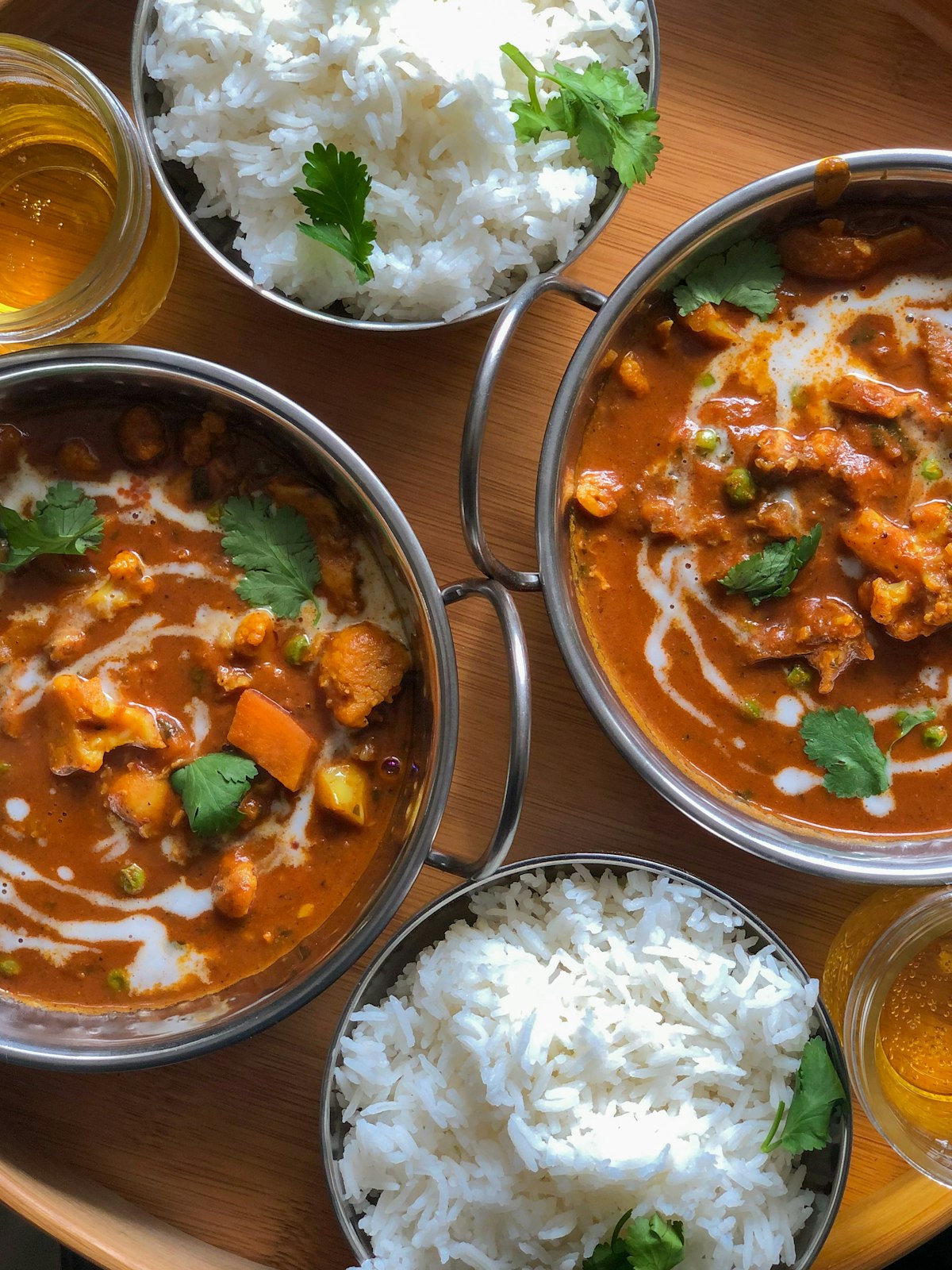
Authentic Prawn Balti Recipe from Birmingham
The balti is Birmingham's own invention, born in the Balti Triangle around Sparkbrook and Sparkhill in the 1970s and 80s, and it is unlike almost any other British curry-house dish. It is not a slow braise. It is a fast, fierce stir-fry cooked in a thin pressed-steel bowl, the balti pan itself, and served in that same bowl straight to the table. A prawn balti is the ideal dish to learn the technique on, because prawns cook in a couple of minutes and reward you for keeping the heat high and the cooking short.
What actually makes a balti a balti
Three things define it. First, the pan: a two-handled thin-gauge steel bowl that heats almost instantly and lets you cook over a flerce flame in minutes, the domestic echo of the restaurant's roaring burners. Second, the base sauce, a pre-cooked, lightly spiced onion-and-tomato gravy that every balti house keeps in a big pot and ladles into individual orders. Third, the speed: the finished dish is assembled and cooked in one blast, so the spices stay bright and the main ingredient stays just-cooked rather than stewed. Get those three right and you have a balti; slow-cook it in a heavy casserole and you have something else entirely.
The balti base sauce
Make this ahead. It is the foundation and it is worth doing properly. In a large pan cook four roughly chopped onions in oil over a medium heat until soft and pale gold, around twenty minutes. Add a heaped tablespoon of ginger-garlic paste and cook out the raw smell. Stir in a tin of chopped tomatoes, a teaspoon of turmeric, a teaspoon of salt and about 600ml of water. Simmer for thirty to forty minutes, then blitz to a smooth, pourable gravy with a stick blender. You want it the consistency of single cream. This freezes well in portions, and having it ready is the difference between a balti that takes four minutes to finish and one that takes forty.
Prep for a prawn balti
Because the cooking is so fast, everything must be ready at the pan before you light the flame. For two people you will need:
- 300g raw king prawns, peeled and deveined, patted thoroughly dry
- Two ladles of the base sauce, roughly 300ml
- Two tablespoons of oil or ghee
- Half a teaspoon of cumin seeds
- One teaspoon of balti masala, or a mix of ground coriander, cumin and a little fenugreek
- Half a teaspoon of chilli powder, or to taste
- A quarter teaspoon of turmeric
- One green chilli, sliced, and a thumb of ginger cut into fine matchsticks
- A ripe tomato, quartered, and a small handful of fresh coriander
- A squeeze of lemon and a pinch of garam masala to finish
Raw prawns matter here. Pre-cooked prawns will turn rubbery the moment they hit the hot base, so buy them raw and grey and let them turn pink in the pan.
The cook, minute by minute
Get the balti pan or a wok genuinely hot before any oil goes in. Add the oil, then the cumin seeds; they should sizzle immediately. Add the ginger matchsticks and green chilli and stir for fifteen seconds. Tip in the ground spices, the chilli powder and turmeric, and cook them in the oil for no more than twenty seconds, moving constantly so they toast rather than burn. Immediately ladle in the base sauce, which stops the spices catching and starts bubbling hard at once. Let it boil fiercely for two minutes to tighten and darken. Now add the prawns and the quartered tomato, and cook for just two to three minutes, stirring, until the prawns have turned pink and curled and the sauce clings. Finish off the heat with lemon, garam masala and torn coriander. From flame to table should be under six minutes.
Getting the texture right
A balti sauce should coat the prawns, not drown them; if it looks soupy, boil it harder for a minute before the prawns go in, because you cannot reduce it much once they are cooking without overcooking them. If it tightens too far, loosen with a splash of water. The prawns are done the instant they are opaque throughout with no grey remaining, and the single most common mistake is leaving them in for another minute out of caution. Pull the pan at the first moment they look ready and they will stay succulent by the time they reach the table.
Serving it the Birmingham way
Tradition is to serve the balti in the pan it was cooked in, with a balti naan, a large, light, oval-shaped bread meant to be torn and used as the cutlery. No rice is strictly necessary in the classic Sparkhill style, though many order both. Because the dish is cooked to order and to order alone, a balti rewards small batches: cook for two at a time rather than doubling everything into one crowded pan, where the sauce will steam instead of fry and you will lose the searing character that makes the dish what it is. Once you are comfortable with prawns, the same base and the same fast method carry chicken, lamb or mixed vegetables with only the cooking time adjusted for the main ingredient.
Related Articles
Shorshe Ilish: The Bengali Art of Hilsa in Mustard Gravy
Shorshe ilish marries the oily, intensely flavoured hilsa fish with a sharp mustard gravy in a dish that sits at the very heart of Bengali identity. Here is how it is built, why the bones matter, and how to tame the bitterness of the mustard.

Kosha Mangsho: How Bengalis Slow-Cook Mutton to Mahogany
Kosha mangsho is Bengal's deep, dark, celebratory mutton curry, coaxed to a mahogany sheen through slow reduction rather than added colour. This is the bhuna-style technique behind the wedding-and-festival classic, and how to serve it with luchi.

Chingri Malai Curry: Bengal's Prawn and Coconut Showpiece
Chingri malai curry pairs plump prawns with a silky, gently spiced coconut gravy in one of Bengal's grandest dishes. We trace its possible Malay roots, explain how to pick the right prawns, and share the technique that keeps the coconut milk from splitting.